
Offset vs Digital Printing: What Creators Need to Know
Choosing the right printing method is one of the most important decisions a creator, publisher, or studio will make. The printing process directly impacts cost, quality, turnaround time, and ultimately the experience your audience will have with your work. This guide will walk you through the key differences, advantages, and ideal use cases for each method.

BlueNorth Press
Professional High-Quality Printing
What Is Digital Printing?
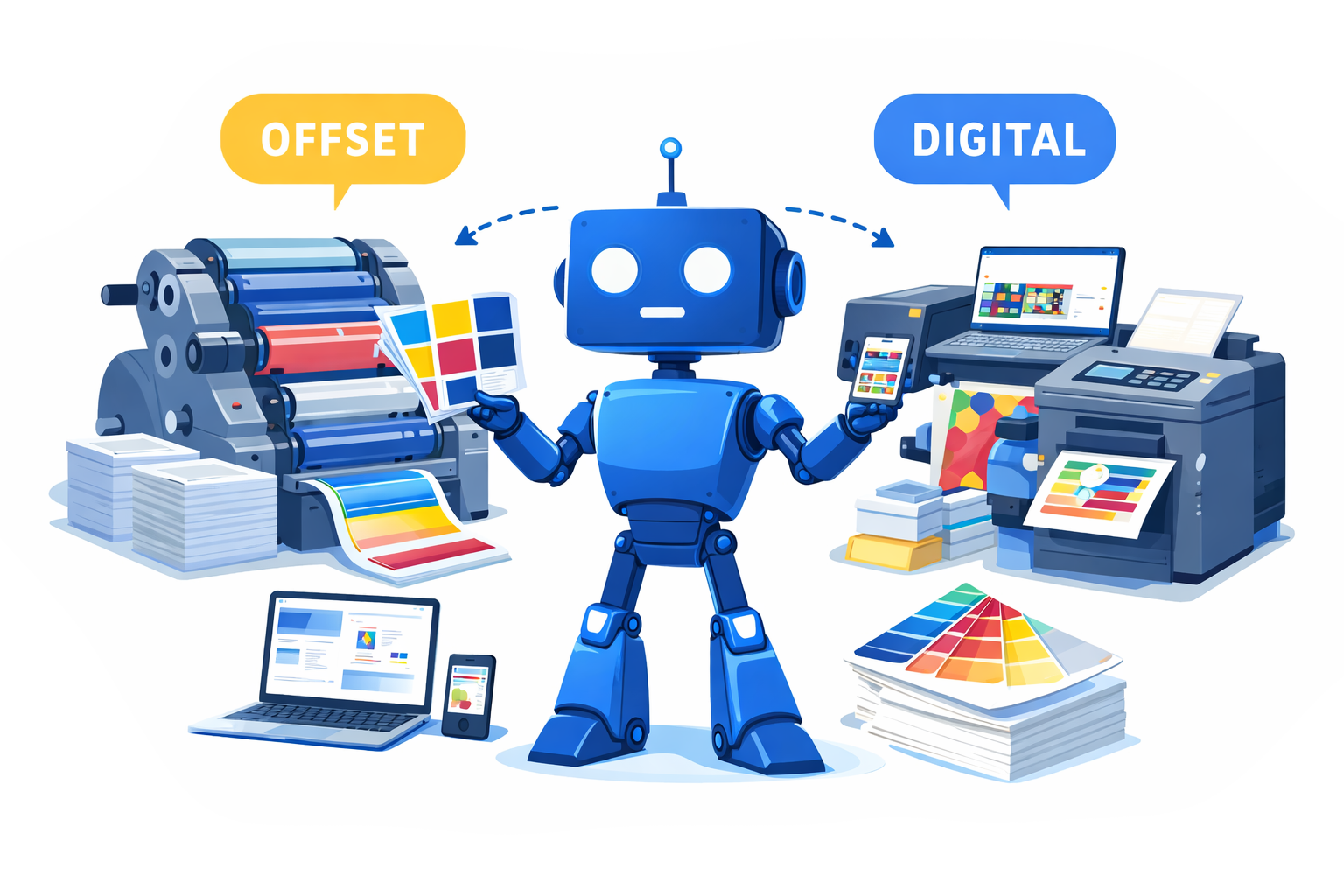
Digital printing is a modern process that transfers files directly from a computer to the printer without the need for physical plates. It is similar to high-end office or professional laser printing, but at a much higher level of quality and precision.
Because there is no setup involving plates or mechanical calibration, digital printing is fast, flexible, and cost-effective for smaller quantities.
Key Advantages of Digital Printing
1. Low Setup Cost
There is little to no preparation needed before printing. This makes digital printing ideal for:
• Small runs
• Proof copies
• Test prints
• Print-on-demand
Creators who are still validating their audience or testing a new product can significantly reduce risk by using digital printing.
2. Fast Turnaround
Digital printing allows for quick production. In many cases, books or materials can be ready within days instead of weeks. This is extremely useful when:
• You have tight deadlines
• You need fast revisions
• You are producing marketing materials for events or launches
3. Flexible Quantities
You can print:
• 10 copies
• 50 copies
• 100 copies
without a large price jump. This flexibility allows creators to manage inventory and cash flow more safely.
4. Easy Updates
Because there are no plates, you can easily:
• Correct errors
• Update versions
• Change covers
• Customize content
This makes digital printing ideal for evolving projects.
Limitations of Digital Printing
Despite its advantages, digital printing does have some trade-offs.
• Higher Cost Per Unit in Large Quantities
• As quantity increases, digital printing becomes more expensive compared to offset.
• If your goal is large-scale distribution, digital is rarely the most cost-efficient solution.
• Paper and Finishing Limitations
• Some premium finishes and paper options may not be available or may be more limited compared to offset.
• Color Consistency
While digital quality has improved significantly, large runs may show slight variation from batch to batch.
What Is Offset Printing?
Offset printing is a traditional method that uses metal plates to transfer ink onto paper. Each color is applied through a separate plate, which allows for exceptional accuracy and consistency. This method has been the industry standard for decades, especially in high-end publishing.
Key Advantages of Offset Printing
1. Superior Color Accuracy and Consistency
Offset printing produces:
• Rich blacks
• Accurate skin tones
• Deep contrast
• Smooth gradients
For projects such as: Art books; Premium comics; Photography collections; Collector’s editions...
offset remains the gold standard.
Once calibrated, every copy looks the same, even in large print runs.
2. Lower Cost in High Volumes
Offset printing becomes significantly cheaper per unit as quantity increases.
This makes it ideal for:
• Retail distribution
• Crowdfunding campaigns
• Convention inventory
• Wholesale production
• The more you print, the more you save.
3. Wide Material and Finishing Options
Offset printing offers a broader range of:
• Papers
• Coatings
• Special finishes
• Textures
• Embossing and foil
This flexibility is essential for premium projects.
4. Professional Market Perception
High-quality offset printing can elevate your brand. The physical experience of holding a well-produced book increases perceived value and can justify higher retail prices.
Limitations of Offset Printing
Higher Initial Investment
Offset requires:
• Plate creation
• Calibration
• Setup time
This increases upfront cost, making it risky for small or uncertain projects.
Longer Production Time
Offset runs typically take weeks instead of days. Planning and scheduling become essential.
Less Flexibility
Once plates are created, making changes becomes expensive or impossible.
This means:
• Errors can be costly
• Updates are limited
• Versioning requires new setup
When Should Creators Choose Digital Printing?
Digital printing is ideal when:
• You are testing a new project
• You want proof copies
• You need short runs
• Your budget is limited
• You are validating market demand
• You need quick turnaround
Many independent creators begin with digital printing to reduce risk and move to offset once demand is proven.
When Should Creators Choose Offset Printing?
Offset printing makes more sense when:
• You already have an audience
• You are running a crowdfunding campaign
• You are distributing to stores
• You need premium quality
• You want the lowest cost per unit
• You are printing large quantities
If your goal is long-term brand growth and professional distribution, offset is often the best strategic choice.
A Hybrid Strategy: The Smart Approach
Today, many successful creators use both methods.
For example:
- Start with digital printing for proofing and small releases
- Validate the audience and gather feedback
- Move to offset for large production
This approach minimizes risk while maintaining high quality and scalability.
CONCLUSION
The physical result is what people will hold, collect, and remember.
If your goal is to sell or deliver printed work, the production process deserves as much attention as the creative process. Choosing between digital and offset printing is a strategic decision. The right choice can protect your budget, elevate your brand, and bring your vision to life in the best possible way.